FEELING STUCK IN YOUR THOUGHTS?
Perhaps you don't need more answers
You need enough quiet to hear your own
WHEN YOU'VE DONE SO MUCH THINKING, WHY DO YOU STILL FEEL STUCK?
You may look like you’re coping on the outside, getting through each day, managing responsibilities and carrying on as expected. But inside, something doesn’t feel quite right.
Perhaps your mind rarely seems to stop. You analyse conversations, question your decisions, try to understand your reactions, or find yourself going over the same things again and again.
You may already have tried therapy, read the books or listened to the podcasts. You might understand attachment, relationships or some of the patterns you’ve developed and yet knowing all of this hasn’t necessarily changed how you feel.
Sometimes, the more information we take in, the harder it becomes to hear ourselves amongst it all.
You might find yourself asking:
Who am I now?
What do I actually want from this stage of my life?
Why do I feel stuck when everything looks “fine”?
Why do I react the way I do?
At times, you may also notice:
You react more strongly than you’d like in certain situations
Relationships feel harder or more emotionally charged than you expect
You understand your patterns but still find yourself repeating them
You feel like a different version of yourself under pressure
There’s a quiet sense that something is missing
These experiences can be confusing and sometimes lonely.
You may feel as though you should be able to work things out for yourself, particularly when you already understand so much.
But perhaps you don’t need another explanation or another answer.
Perhaps you need somewhere you can slow down, quieten some of the noise and begin to hear yourself again.
Therapy doesn’t always need to give you more information, more strategies or more things to think about.
Sometimes the work begins by creating enough space to notice what is already there.
WHY I WORK THE WAY I DO
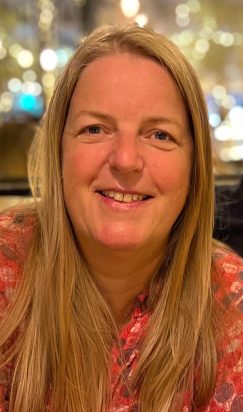
Welcome, I’m Michele.
Before becoming a therapist, I spent many years working in the corporate IT world. Life was busy and demanding, long hours, constant pressure and always another goal to work towards. From the outside, things looked successful. Inside, I felt increasingly disconnected from myself and unsure what any of it was really for.
Eventually, I reached a point where I could no longer ignore that feeling. I stepped away from the life I had built and began a period of travel, reflection and change. I didn’t suddenly find all the answers. What happened was slower than that. I began to understand myself differently, to recognise what I was feeling, question some of the ways I had been living and become clearer about what mattered to me.
That experience has stayed with me and has influenced the therapist I have become.
But my understanding of people hasn’t come only from professional training. I am also a wife, mother, daughter and sister, and my own life has included many of the changes, relationships and losses that can shape us over time.
I have experienced the end of a marriage and all the change that came with it, and later in life I remarried. Both experiences have taught me a great deal about relationships, about love and loss, change and compromise, and how relationships can challenge our sense of who we are and ask us to understand ourselves in different ways.
I’ve experienced motherhood and how that relationship changes as children grow and need us differently. I’ve cared for elderly parents and experienced their deaths. I have also experienced bereavement through suicide and the lasting impact this kind of loss can have.
These experiences don’t mean that I know what somebody else’s experience feels like, each person’s story is their own. But they have taught me something about the complexity of being human. We can love people deeply and still struggle in our relationships with them. We can grieve what we have lost while continuing to live our lives. We can care for others while losing sight of what we ourselves might need. And experiences can change us in ways that take time to understand.
Life changes us. What once fitted may no longer fit in quite the same way, and the person we have become may need something different from the person we once were.
Alongside my own life experience, more than 20 years working across counselling, therapeutic bodywork, Health Kinesiology and Reiki has deepened my interest in the whole person, not only what we think, but what we feel, how we relate to others, what we notice in our bodies and the ways our experiences can continue to shape us.
I have learned not to rush the process of understanding someone.
When we are struggling, there can be a powerful urge to find the answer: Why am I like this? What should I do? How do I make this stop?
Sometimes answers and practical strategies are useful. But sometimes searching harder simply takes us further into our heads and further away from what we are actually experiencing.
My way of working is thoughtful, curious and patient. I will listen carefully and take you seriously, but I won’t rush to explain you to yourself. I’m comfortable when we don’t immediately know the answer.
You may come to therapy with something very clear that you want to talk about, or simply with a sense that something isn’t quite right. You might find it difficult to put into words, or discover that what you thought you wanted to talk about leads us somewhere quite different.
I’m comfortable allowing that to unfold.
I don’t need you to have worked yourself out before we meet. Part of my role is to listen carefully to what you bring, notice what begins to emerge and help you make connections that may be difficult to see when you’re living in the middle of them.
Sometimes that means staying with something rather than immediately trying to change it. Sometimes it means gently wondering together about a feeling, a reaction or a pattern that keeps appearing.
We don’t have to know where the conversation is going for it to take us somewhere important.
For me, therapy begins with being genuinely interested in you, your experience, your relationships, your questions and the things you may not yet have words for.
- Registered Member of the British Association for Counselling and Psychotherapy
(BACP, Membership No. 402141)
Working within the BACP Ethical Framework
- Degree in Integrative Counselling & Psychotherapy — University of Greenwich
- 20+ years’ experience across therapeutic and healthcare practice
Including counselling, therapeutic bodywork, Health Kinesiology and Reiki
- Certified Online & Telephone Counsellor
Additional mind–body training and experience:
- Health Kinesiology Practitioner Levels 1–6
- VTCT Bodywork Therapist
- Diploma in Anatomy & Physiology
- Reiki Master, UK Reiki Federation
Ongoing professional development and regular clinical supervision
My background has shaped the way I understand people, not simply through their thoughts, but through their emotions, relationships and physical responses too. As an integrative counsellor, I don't believe one approach fits everyone. I draw on different therapeutic perspectives to help us understand what is happening for you and find a way of working that feels right for you.


How we might work together
I see therapy as something we explore together. You bring your experience of your life, and I bring curiosity, attention and a willingness to understand it alongside you.
You have lived your life, formed your relationships and found ways of coping for reasons that may not always be obvious at first. Together, we can become curious about those things and begin to understand what they might mean for you now.
I listen carefully to what you tell me, but I'm also interested in what happens around the words. The things you find yourself returning to. A reaction that seems stronger than you expected. Something you dismiss quickly. A contradiction. A silence. Or a feeling that is difficult to name.
Sometimes I may notice a pattern or make a connection and wonder about it with you. At other times I may offer a different perspective or gently challenge something that doesn't quite seem to fit. I won't assume that my understanding is the right one, what matters is whether something feels meaningful to you.
There may be connections between what is happening now and experiences or relationships from earlier in your life. We can explore these when they seem relevant, not because the past needs to be endlessly analysed, but because understanding where something came from can sometimes help us recognise why it still has such a hold on us today.
And there will be times when we don't immediately know what something means. I think that matters too. Therapy doesn't always need to rush towards an explanation or solution. Sometimes staying with something, with curiosity rather than judgement, allows us to understand it differently.
I am interested not only in what you know about yourself, but in what you experience.
You may already be very good at explaining why you are the way you are. Our work can also involve noticing what you feel, how you respond in relationships, what happens when you feel vulnerable or uncertain, and what you may have learned to protect or keep out of sight.
The relationship we build is an important part of that work. I want you to feel able to disagree with me, question something I've said, not know the answer, change your mind, be quiet, laugh, become emotional or bring parts of yourself that don't make complete sense yet.
My hope isn't that I become another person you look to for answers. It's that, through our work together, you become increasingly able to recognise your own feelings, understand your responses and trust yourself, including when life doesn't offer a clear answer.
What to expect during a counselling session...
There is no set formula for a counselling session. You don't need to arrive knowing exactly what you want to talk about, having worked out what is wrong, or even knowing where to begin.
When we meet, I'll usually give you some space to settle and we can start wherever feels most natural. You might want to talk about something that has happened since we last met, something that has been on your mind, or simply a feeling that you can't quite make sense of.
Some sessions may involve a lot of talking. Others may feel quieter. There can be moments when we stop and think, notice a feeling or sit with something for a while. You don't need to fill every silence, and I won't expect you to talk about something before you feel ready.
You also don't have to worry about saying the 'right' thing. Therapy isn't a performance and there isn't somewhere you are supposed to get to by the end of each session. Some sessions may bring insight or relief; others may leave you with something you're still thinking about afterwards.
You set the pace. We have 50 minutes together and that time is yours. My role is to be alongside you, paying attention to what emerges and helping you explore whatever feels important that day.
Contact Me
If you’re considering counselling, I offer a free, informal introductory call where we can talk briefly about what brings you to therapy, you can ask any questions, and we can see whether working together feels right for you.
You can contact me using the form below. All enquiries are treated in confidence and I aim to respond within 24 hours, Monday to Friday. If you would prefer me to call you, please leave your telephone number and a suitable time to reach you.
Introductory Call
I offer a free, informal introductory call so we can get a sense of one another before deciding whether to work together. You can tell me a little about what has brought you to counselling, ask any questions you may have, and get a feel for how I work.
There is no obligation to book a session afterwards. What matters is that you feel comfortable talking with me and that working together feels right for you.
If you decide you would like to continue, we can then arrange your first counselling session. All sessions are confidential and I work within the ethical framework of the BACP.
Fees
Introductory call — Free
50-minute counselling session — £70
Single Session Therapy — £70
Online via Zoom
Location
I offer face-to-face counselling at Surrey Holistic in Godalming, Surrey, within easy reach of Guildford and the surrounding areas. I also offer online counselling across the UK and internationally.
Explore More
Explore answers to common questions, discover ideas that may help you make sense of what you're experiencing, or pause for a while with my latest thoughts and reflections.
Frequently Asked Questions
The length of counselling is different for everyone and depends on what brings you to therapy and what you hope to explore. For some people, a few sessions can bring clarity and a sense of direction. Others find that having more time allows them to explore deeper patterns, relationships or changes in their lives.
We can talk about what might suit you when we first meet and review how the therapy is feeling as we go. There is no expectation that you commit to a particular number of sessions.
Overthinking can be exhausting. You may replay conversations, analyse your reactions, question decisions or find yourself repeatedly trying to work out why you feel the way you do.
Often, overthinking isn't simply a habit.
Thinking can be our mind's way of trying to create certainty, make sense of something difficult or protect us from getting things wrong.
Sometimes we stay in our thoughts because feelings such as uncertainty, vulnerability, sadness, anger or fear are harder to sit with. At other times, the tendency to analyse everything may have developed through earlier experiences where being alert to other people's moods, reactions or expectations helped us feel safer.
The difficulty is that the more we search for certainty through thinking, the more caught up in our thoughts we can become. We may understand ourselves intellectually and still find that the same feelings, reactions or relationship patterns keep returning.
In counselling, we can become curious about what your overthinking may be trying to do for you, rather than simply trying to stop it. We can explore what sits underneath the thinking, notice patterns and begin to understand yourself not only intellectually, but emotionally too.
The aim isn't to stop you thinking. It's to help you become less trapped by your thoughts, more comfortable with uncertainty and more able to trust yourself.
Not everyone finds it easy to identify or put feelings into words. You may know that something is bothering you, but struggle to explain exactly what it is. Or you might find yourself talking about what happened and analysing it very clearly, while feeling less certain about what is happening emotionally underneath.
Sometimes thinking becomes easier and safer than feeling.
This can develop for many reasons. Perhaps emotions weren't talked about much when you were growing up, you learned to keep things to yourself, or showing vulnerability didn't always feel comfortable or safe. Sometimes we become very good at coping, getting on with things or understanding situations intellectually, without having had much opportunity to notice and understand our emotional responses.
You don't need to arrive at counselling knowing how you feel or having the right words. We can take time to notice what happens as you talk, your thoughts, feelings, reactions and sometimes what you experience physically.
There is no pressure to go somewhere emotionally before you are ready.
Over time, becoming more familiar with your emotional world can help you recognise what you need, understand why certain situations affect you so strongly and respond to yourself and others with greater awareness.
You don't have to be “good at talking about feelings” to benefit from therapy. Finding a way to understand and express them can be part of the therapy itself
Confidentiality is an important part of counselling. What you share with me is treated with respect and care, and I will explain how confidentiality works when we begin working together.
There are, however, some limits to confidentiality.
There may be circumstances where I need to share information, particularly if I have serious concerns about your safety or the safety of someone else, or where I have a legal or professional obligation to do so. Wherever possible and appropriate, I would aim to discuss this with you first rather than taking action without your knowledge.
I also have regular professional supervision, as required by the BACP. This supports me in working safely and ethically. Any client work discussed in supervision is treated confidentially and with care.
If you have any concerns about confidentiality, you are very welcome to ask me about them during our introductory call or at any point during our work together.
Thoughts and Reflections
Why taking the first step towards counselling can take so much courage
We live in a world full of noise
Our attention is constantly being pulled somewhere, towards work, family, relationships, responsibilities, phones, messages, social media, news and everything else that fills our days.
There is always something else to think about.
Someone else who needs something.
Something else that needs doing.
And somewhere amongst all of that…
what about me?
Where is the time to stop? To take stock. To breathe. To notice how we are actually feeling.
I was reminded recently of just how difficult it can be to make that first contact with a counsellor.
Perhaps there is a feeling that has been quietly making itself known.
Perhaps there is an inner voice that has become a little harder to ignore. Or perhaps there is simply a sense that we need some space.
Whatever it is, noticing it is one thing.
Listening to it is another.
Thinking about beginning...
Sometimes somebody who cares about us may notice something too.
They might gently encourage us to talk to someone. And perhaps, eventually, we find ourselves considering counselling.
Then there is the searching.
Looking through directory listings and websites, trying to choose from photographs and paragraphs written by people we've never met.
Trying to find someone who somehow feels right.
And then comes the moment of actually doing it.
Writing the email.
Making the call.
Pressing send.
What does a first step look like?
From the counsellor's side, what arrives may look very simple.
A name. A few sentences. A request for an introductory conversation.
But recently I've found myself thinking much more about what I don't see.
Everyone who reaches out has their own story. Their own experiences, their own reasons for considering counselling and their own journey to that moment. But when that first message arrives, I don't know what that story is.
I don't know what it has taken for someone to get to that moment.
I don't know how long they have been thinking about counselling, how many times they may have looked at a website and closed it again, or whether they have written and rewritten their message before finally sending it.
And I don't need to know any of that to recognise something important.
It takes courage.
Giving ourselves permission
Perhaps part of beginning counselling is giving ourselves permission.
Permission to acknowledge that something doesn't feel quite right.
Permission to stop trying to work everything out alone.
Permission to make some space for ourselves amongst all the other demands and voices competing for our attention.
It doesn't mean that we have failed to cope.
And it doesn't mean that we need to know exactly what is wrong or what needs to change.
Sometimes we simply need somewhere quiet enough to begin listening to ourselves.
The courage to begin
There is something significant in that first contact.
Before we have even sat together in a room, something has already happened.
The thinking about beginning has become the beginning.
A first step has been taken towards making space for ourselves.
And perhaps that is worth recognising.
Because sometimes change doesn't begin with knowing exactly what needs to happen next.
Sometimes it begins with creating enough space to hear ourselves and finding the courage to take that first step.
© Michele Atkin
Powered by WebHealer